
Shopify and ERP returns: where margin leaks
A return is not one process: product, cash, stock and support move at different speeds and can quietly erode margin.
Read more Codefuente a step beyond technology
 Blog
Content related to ERP and its impact on processes, systems and technical decisions.
A return is not one process: product, cash, stock and support move at different speeds and can quietly erode margin.
Read more
Odoo has announced a qualified e-signature partnership with itsme. See what changed, who it affects and what it lets you decide.
Read more
Odoo has announced a partnership with itsme to bring qualified electronic signatures to businesses, with clear operational implications.
Read more
Which Odoo 20 features are worth business attention now, and which ones still do not justify changing a working process.
Read more
Before configuring Odoo, clarify processes, owners, data and exceptions so the ERP does not inherit operational chaos.
Read more
Many API integrations fail not because of technology, but because no one agreed on which system is in charge, what happens when errors occur, and how data quality is measured. This article offers a practical decision framework before coding.
Read more
Many ERP and ecommerce integrations look fine until returns, price changes, stock conflicts or delayed invoices expose the real issue. The hard part is not the connector: it is deciding who gets the final word in each operational exception.
Read more
Many integration projects fail because they try to move orders, stock and invoices without deciding who owns each exception. The real challenge is not connecting systems, but designing the operating rules that prevent breaks, delays and rework.
Read more
Learn what ecommerce should control and what belongs in the ERP to prevent stock errors, blocked orders and repetitive manual work.
Read more
An operational AI agent should not be judged by how convincing it sounds, but by whether it reduces friction, respects boundaries and fits real workflows. This article offers a practical way to decide when it makes sense and when it does not.
Read more
Many companies connect Shopify and their ERP as if it were a technical project. The real problem appears later: orders, stock, returns and invoicing start living under different rules. This article explains when integration is no longer enough and which operational decisions must come first.
Read more
More integrations do not always mean more control. This article explains when the problem is no longer connectivity, but governing processes, data, responsibilities and change without adding operational complexity.
Read more
Before replacing an ERP or adding more integrations, it is worth checking whether the real issue is operational: manual exceptions, scattered rules, duplicate data and decisions made outside the flow.
Read more
Many operational problems are not solved by adding more tools, but by deciding which processes should live together and which should stay separate. This article offers practical criteria for that decision.
Read more
A shared data model helps reduce duplicates, manual reconciliation and inconsistent decisions when ERP, ecommerce, CRM and operations grow at different speeds.
Read more
A practical guide to connecting business systems without duplicate work, lost traceability or integrations that become endless projects.
Read more
A practical way to prioritize ERP, integrations, cloud, security, ecommerce and applied AI.
Read more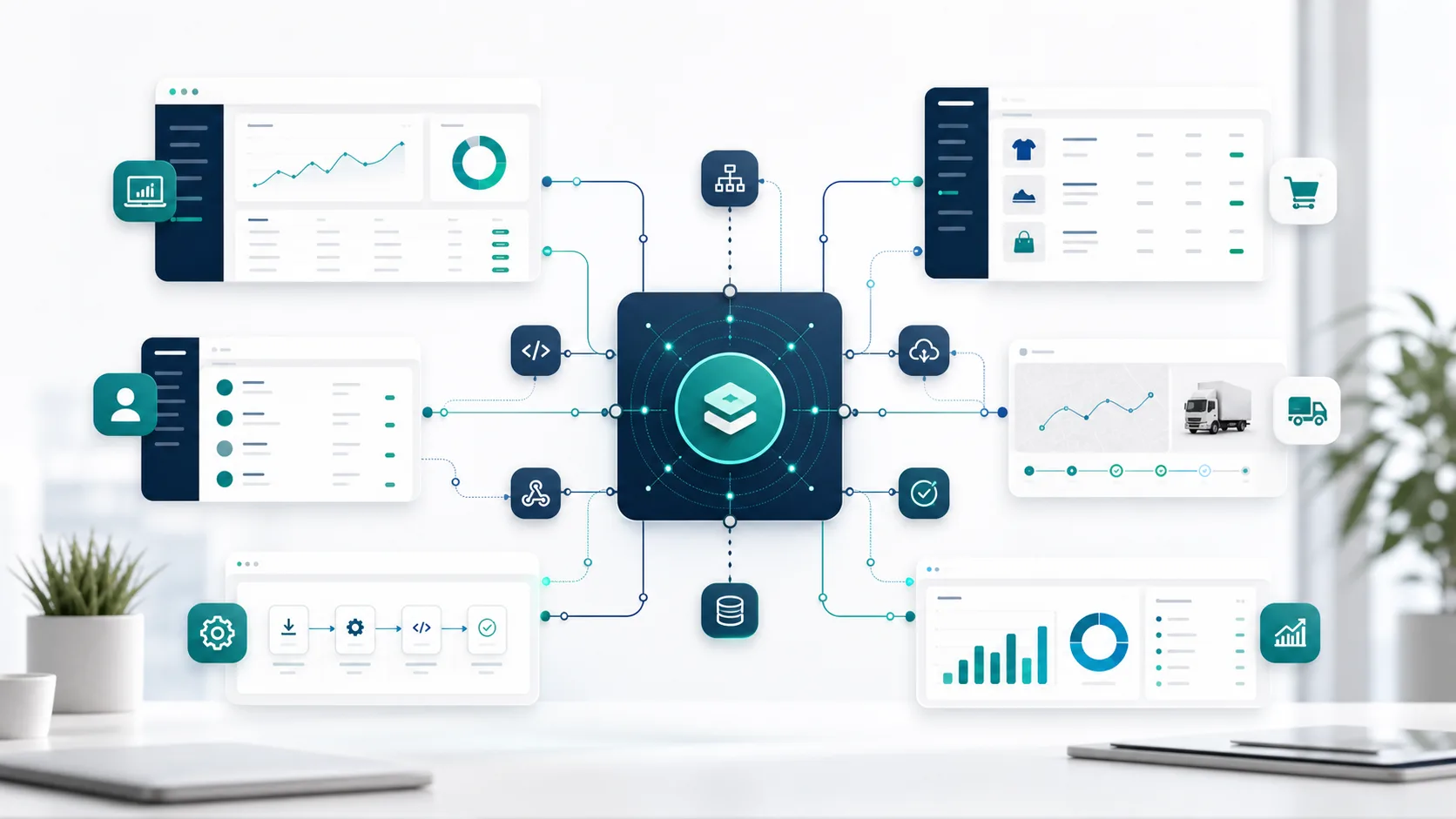
How to prepare ERP, ecommerce and internal system data for useful and maintainable dashboards.
Read more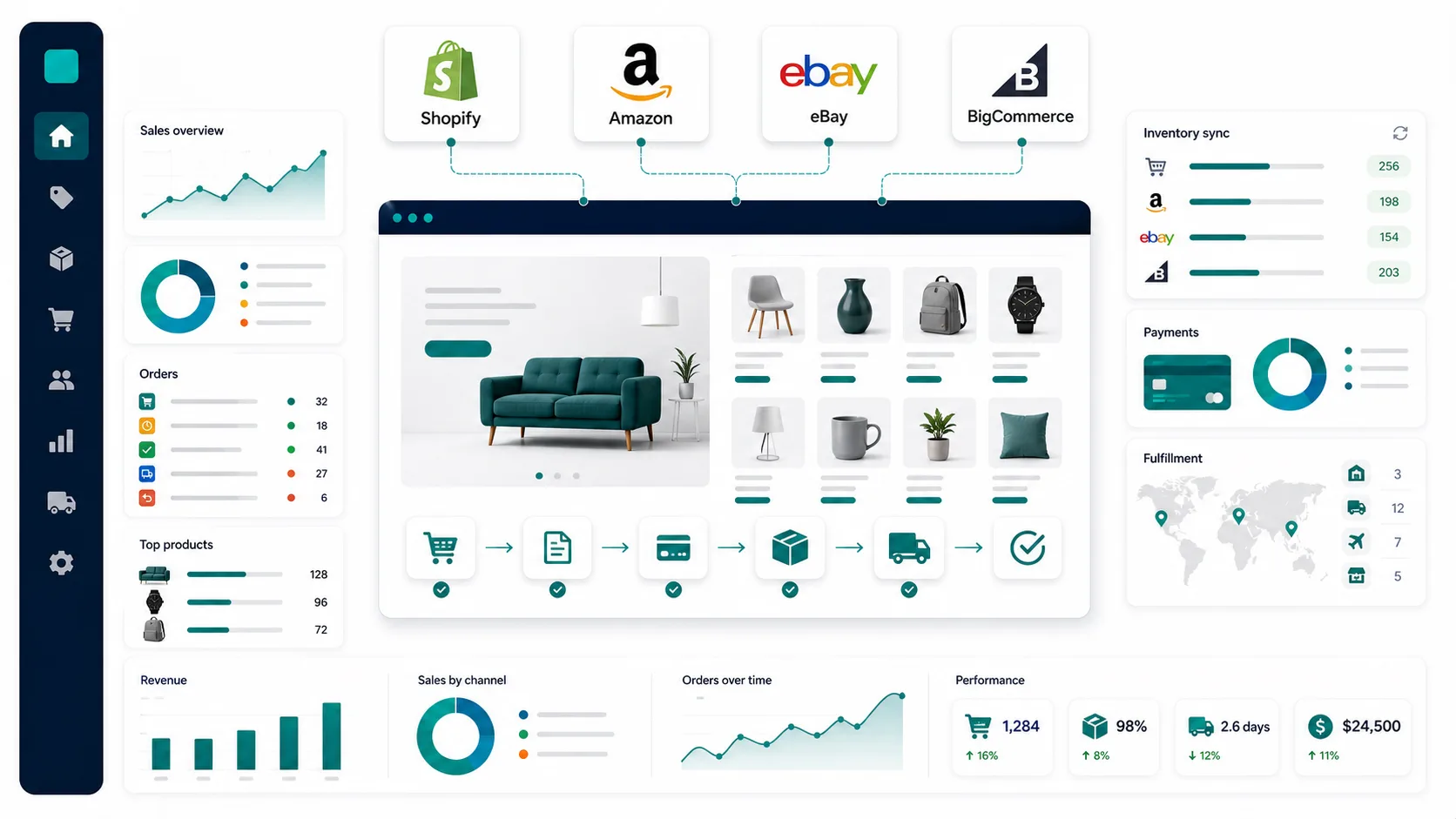
Keys to connect Amazon, eBay, Shopify and ERP with coherent inventory and orders.
Read more Why Shopify gains value when integrated with ERP, catalog, logistics, customer service and reporting.
Read more How to design integrations between ERP, CRM, ecommerce, logistics and analytics without creating fragile dependencies.
Read more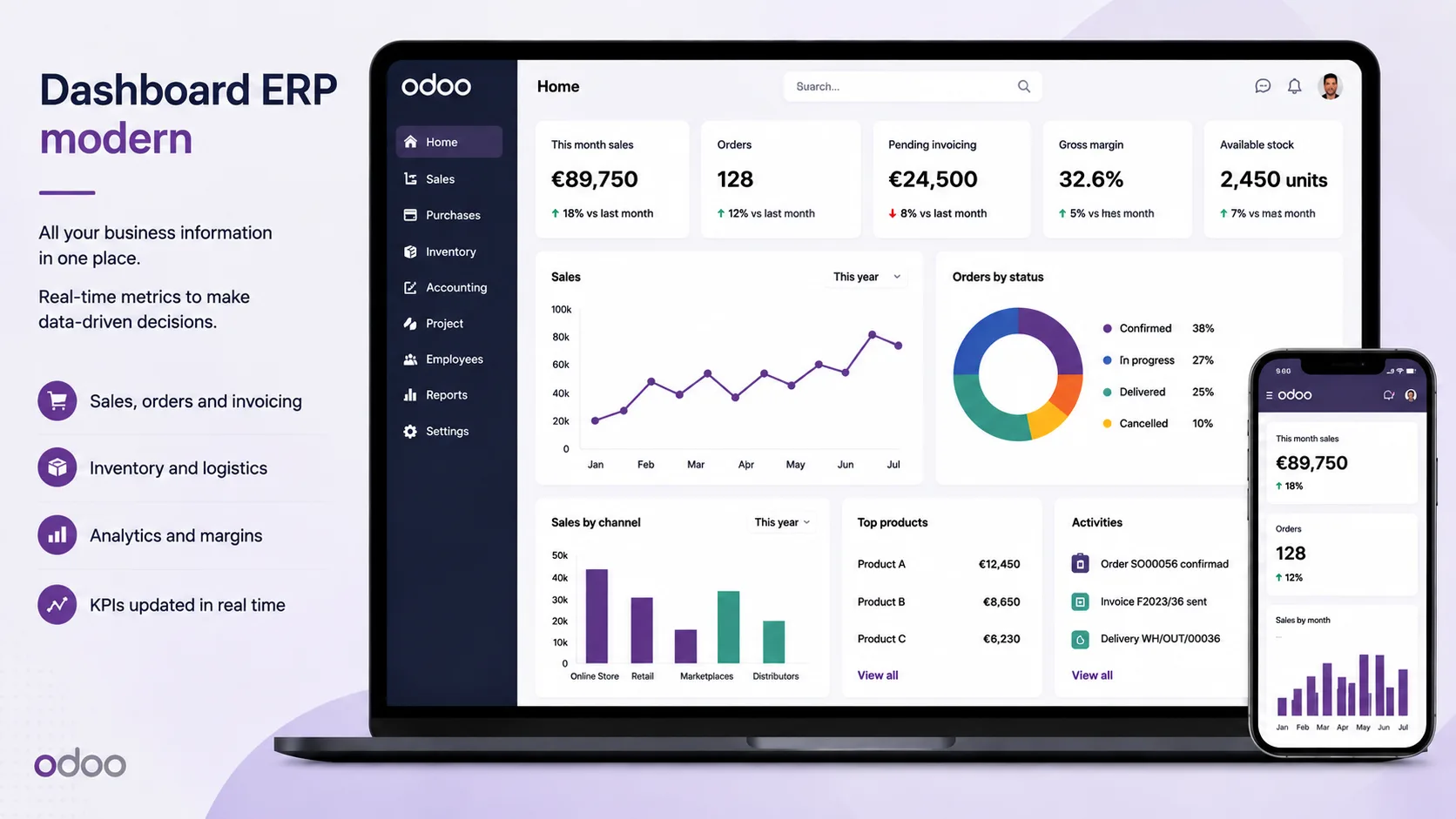
When Odoo makes sense as an ERP and how to connect it with ecommerce, warehouse, billing and analytics.
Read more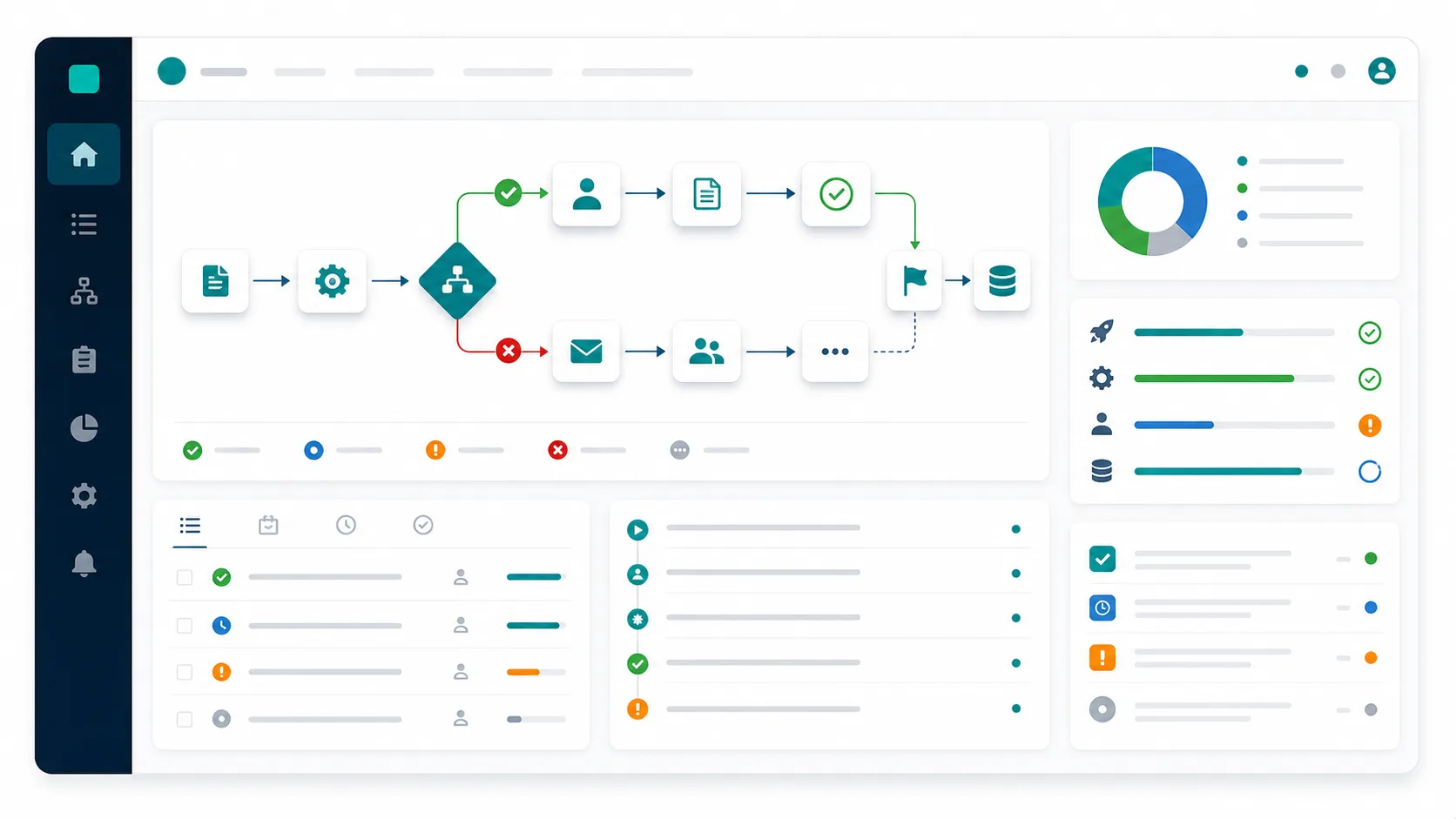
A practical guide to organizing data, systems and decisions before applying AI to business workflows.
Read more