
AI for invoices: automate without losing control
How to use AI to classify and extract invoices without losing control: thresholds, human validation and costly mistakes.
Read more Codefuente a step beyond technology
 Blog
Content related to operations and its impact on processes, systems and technical decisions.
How to use AI to classify and extract invoices without losing control: thresholds, human validation and costly mistakes.
Read more
A return is not one process: product, cash, stock and support move at different speeds and can quietly erode margin.
Read more
Odoo has announced a qualified e-signature partnership with itsme. See what changed, who it affects and what it lets you decide.
Read more
Odoo has announced a partnership with itsme to bring qualified electronic signatures to businesses, with clear operational implications.
Read more
Which Odoo 20 features are worth business attention now, and which ones still do not justify changing a working process.
Read more
Before configuring Odoo, clarify processes, owners, data and exceptions so the ERP does not inherit operational chaos.
Read more
Why a better forecast does not always fix operations, and when a clear commitment date reduces errors, urgency and rework.
Read more
A practical business case on sales, warehouse and customer service: what to decide when the commercial promise no longer fits operations.
Read more
What other companies can learn from a local industrial ecosystem: less storytelling, more coordination, skills and operating discipline.
Read more
Good conference ideas matter only if they change Monday: priorities, handoffs, measures and real operational decisions.
Read more
Automating the first visible bottleneck can lock in a bad process. Know when to slow down, inspect, and fix before digitizing.
Read more
A delayed order is often a coordination problem. Here is how to measure it and decide who owns the exception.
Read more
A practical reading of Avilés as an industrial ecosystem: the value is not faster growth, but better coordination.
Read more
A useful RAG starts with governance, source selection and failure modes, not with the model. The real question is what internal knowledge should be retrievable and under which rules.
Read more
Many ERP and ecommerce integrations look fine until returns, price changes, stock conflicts or delayed invoices expose the real issue. The hard part is not the connector: it is deciding who gets the final word in each operational exception.
Read more
Many integration projects fail because they try to move orders, stock and invoices without deciding who owns each exception. The real challenge is not connecting systems, but designing the operating rules that prevent breaks, delays and rework.
Read more
Learn what ecommerce should control and what belongs in the ERP to prevent stock errors, blocked orders and repetitive manual work.
Read more
An operational AI agent should not be judged by how convincing it sounds, but by whether it reduces friction, respects boundaries and fits real workflows. This article offers a practical way to decide when it makes sense and when it does not.
Read more
Most companies do not have a backup problem. They have a restoration problem. The difference between storing data and getting operations back online usually shows up too late, during an incident.
Read more
A RAG does not fix a messy document base. It works when the real problem is finding and citing internal knowledge with control, traceability and clear boundaries.
Read more
Many companies connect Shopify and their ERP as if it were a technical project. The real problem appears later: orders, stock, returns and invoicing start living under different rules. This article explains when integration is no longer enough and which operational decisions must come first.
Read more
More integrations do not always mean more control. This article explains when the problem is no longer connectivity, but governing processes, data, responsibilities and change without adding operational complexity.
Read more
Before replacing an ERP or adding more integrations, it is worth checking whether the real issue is operational: manual exceptions, scattered rules, duplicate data and decisions made outside the flow.
Read more
Many operational problems are not solved by adding more tools, but by deciding which processes should live together and which should stay separate. This article offers practical criteria for that decision.
Read more
A shared data model helps reduce duplicates, manual reconciliation and inconsistent decisions when ERP, ecommerce, CRM and operations grow at different speeds.
Read more
A practical guide to connecting business systems without duplicate work, lost traceability or integrations that become endless projects.
Read more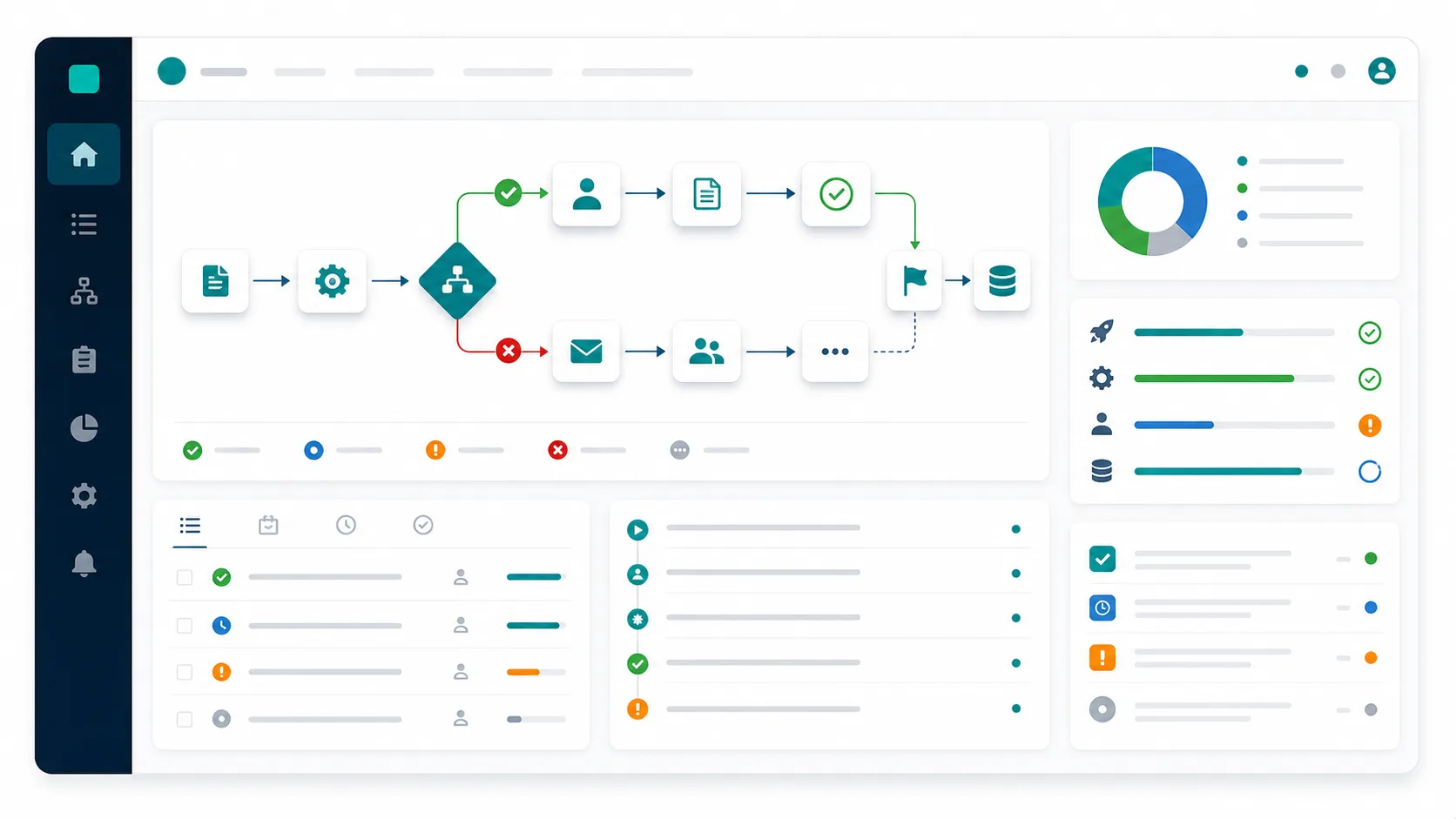
How to combine rules, integrations and AI models to automate tasks with operational control.
Read more