
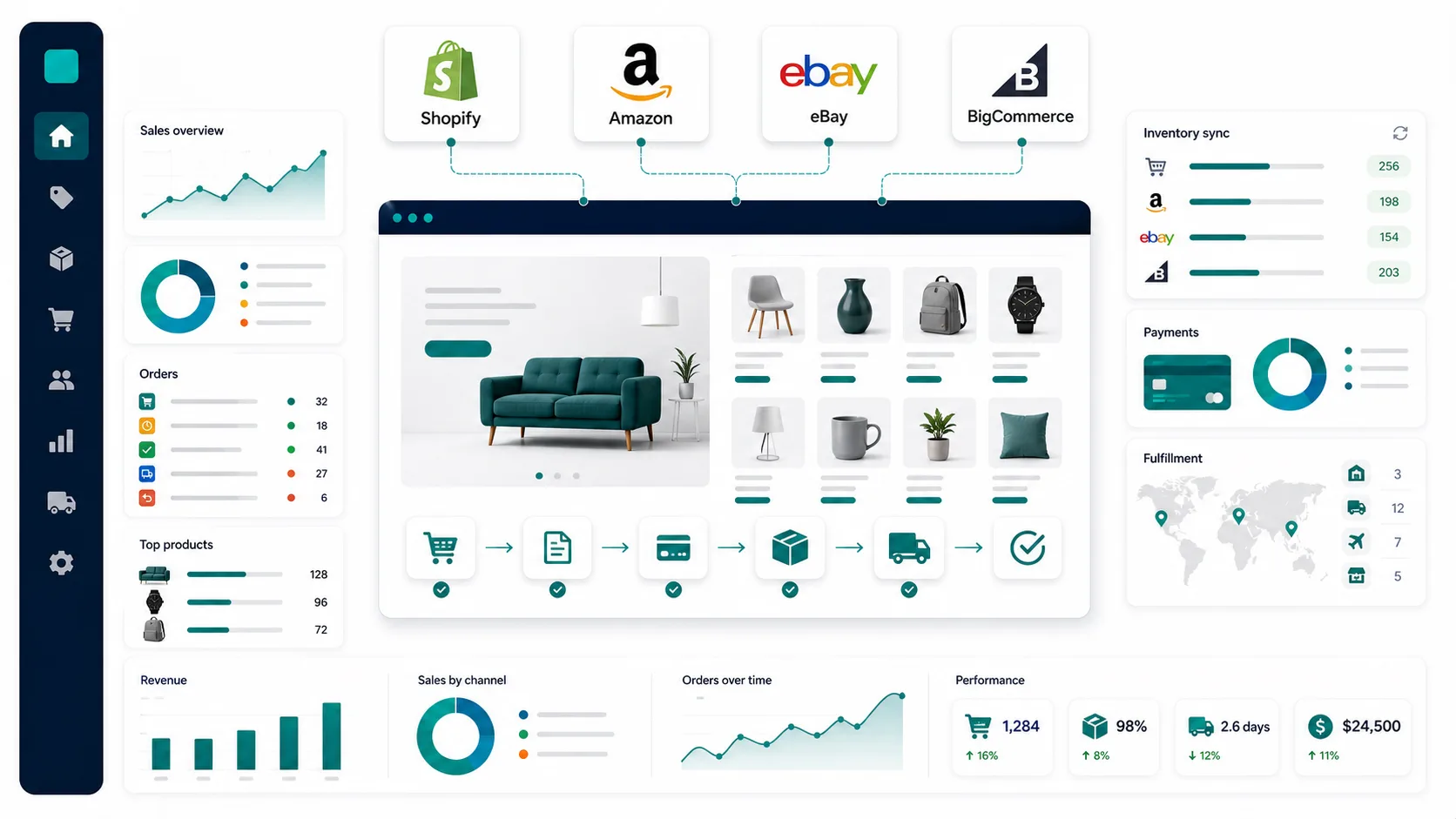
Selling on Amazon, eBay and an owned store increases reach, but also multiplies operational complexity. Without integration, each channel ends up managing products, orders, stock and customer service separately.
More channels should not mean more manual spreadsheets. The priority is a reliable source for stock, orders and catalog.
The priority is unifying inventory, order status and catalog rules. Not every channel needs the same data, but they do need a coherent source to avoid overselling, pricing errors or delays.
The multichannel problem
Each marketplace has its own catalog model, fees, order states, shipping rules and technical limits. When a company also operates with Shopify and ERP, the risk is ending up with four different truths about the same product.
That is why it is worth deciding which system owns the catalog, where available stock is calculated, how prices are published, which orders enter automatically and which incidents require review. Rules must be explicit, because special cases always appear.
Integrations that avoid duplication
Connecting marketplaces with ERP and ecommerce makes it possible to automate listings, consolidate orders and get a clearer view of performance by channel. It also prevents common errors: selling without stock, duplicating orders, missing returns or updating prices too late.
The Amazon Selling Partner API and eBay Developers documentation show the real complexity of these environments. Calling an API is not enough; teams must manage limits, states, retries, errors and reconciliation.
Measure by channel
A mature multichannel operation does not only synchronize data; it also measures. Margin by channel, logistics cost, preparation time, incidents, returns and stock rotation help decide where to invest. Without consolidated data, a company can sell more and earn less.
The right integration reduces manual work, but above all improves decisions. It shows which channel works, which catalog deserves priority and where operations are losing hours.