
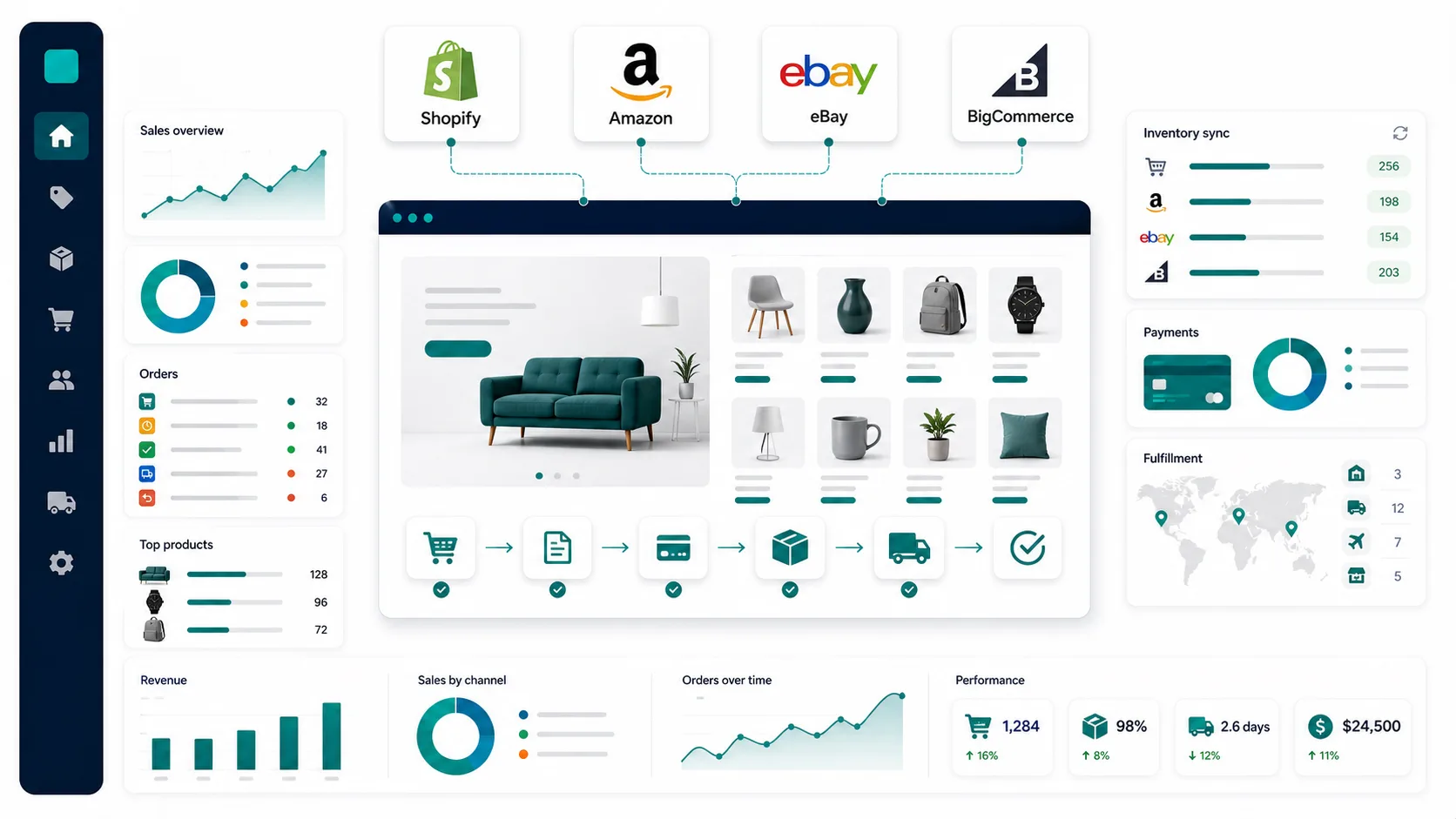
Shopify solves the sales layer well, but an ecommerce company needs more than an attractive storefront. Catalog, prices, stock, orders, returns, taxes, shipping and customer service must connect with operating systems.
The store sells; operations deliver. The difference is how catalog, stock, orders and logistics are connected.
Without that connection, growth increases manual work: exports, imports, corrections, checks and messages between teams. Integrating Shopify with ERP, warehouse and analytics makes it possible to sell with more control.
The store is only the beginning
An ecommerce operation usually depends on several systems. Shopify may manage the shopping experience, but ERP holds products, tariffs, invoices or purchasing; the warehouse prepares shipments; customer service needs order status; and leadership needs margins and profitable channels.
The key is deciding which system owns each data point. Catalog may start in ERP, orders in Shopify and inventory in warehouse, but all systems need a common language. Without that definition, each integration solves the same problem in a different way.
Data and events to control
Common flows include products, variants, prices, customers, orders, payments, returns, stock and fulfillment. Some need near real-time synchronization; others can run in batches. API limits, retries, reconciliation and alerts should also be part of the design.
The Shopify Developers documentation is useful for understanding APIs, webhooks and data models. In companies with ERP, combining that information with internal contracts reduces errors when new channels, price rules or warehouses are added.
Less manual work, more visibility
A connected operation does not eliminate every special case, but it prevents the team from living in copy-and-paste mode. Orders arrive with clear status, stock updates with defined rules, returns are not lost and reports do not depend on manual spreadsheets.
For a company that wants to scale ecommerce, integration is not a secondary technical improvement. It is the difference between selling more with control and selling more while generating more incidents.