
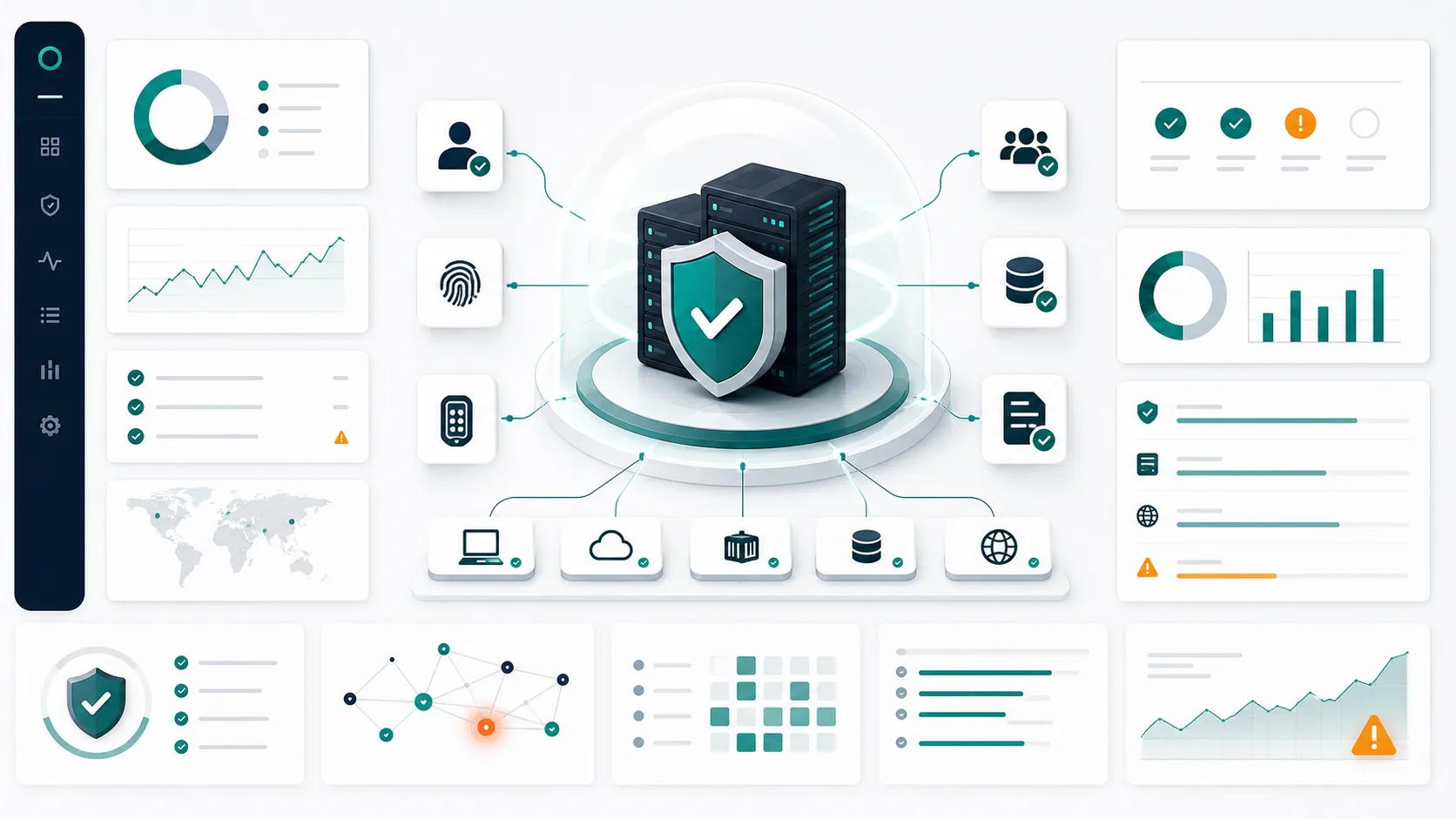
Effective cybersecurity starts with the basics done well: access control, two-factor authentication, least privilege, verified backups, updates, logs and environment segmentation. It is not the most spectacular work, but it is often what prevents serious incidents.
Practical security starts with what can be maintained: access, backups, updates, logs and least privilege.
In companies with many connected systems, integrations are also part of the risk surface. Tokens, webhooks, APIs, middleware and admin panels should be inventoried and protected.
Prioritize real risks
The first step is knowing which assets matter: ERP, ecommerce, email accounts, servers, repositories, cloud panels, databases, backups and support tools. Then review who has access, with which permissions and from where.
Many improvements have immediate impact: enabling MFA, removing old users, rotating exposed keys, closing unnecessary public services, reviewing administrator permissions and checking that backups can be restored. Security improves when it becomes routine, not when it depends on a one-off review.
Applications and integrations
APIs connect critical processes, so they should be treated as sensitive assets. Limit token permissions, log relevant calls, validate inputs, use HTTPS, protect internal panels and alert on unusual behavior.
For web applications, the OWASP Top Ten remains a practical reference. For a broader risk management approach, the NIST Cybersecurity Framework helps organize controls around identifying, protecting, detecting, responding and recovering.
Security without blocking operations
The most useful approach is progressive: identify critical risks, fix obvious exposures, measure improvements and keep reviewing as processes evolve. The goal is not to slow the team down, but to reduce insecure decisions by default.
A security policy has to be understandable for the people who operate the business. If a control is not understood, it will be bypassed. If it fits the workflow, it will last.